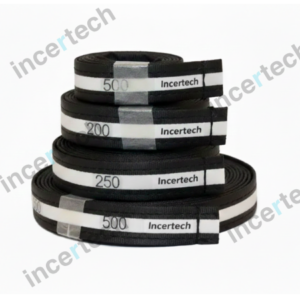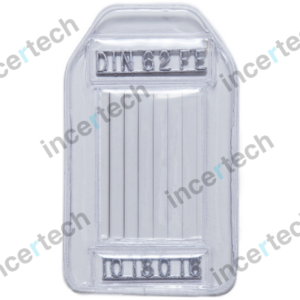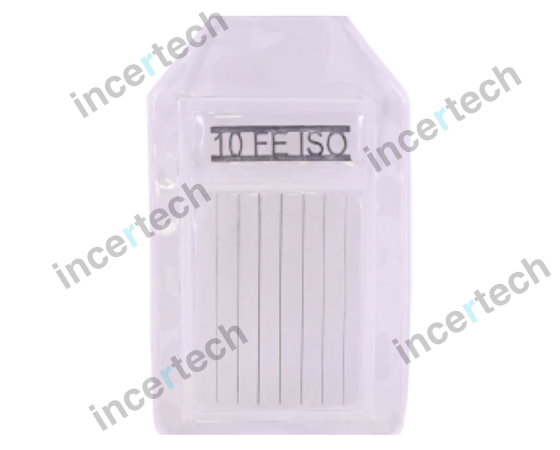
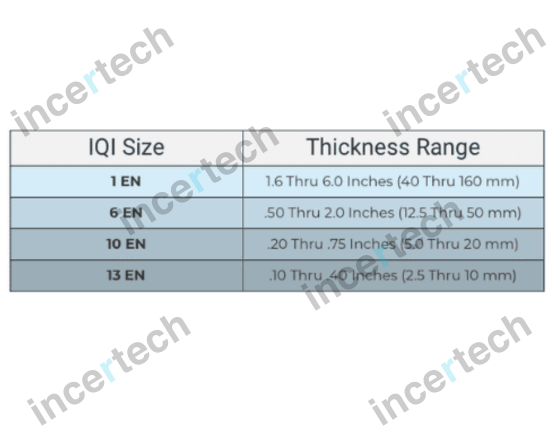
IQI – Image Quality Indicator – is a device for showing the quality of a radiograph. The quality of a radiograph determines the amount of detail that can be shown. Generally, the quality of a radiograph depends on three factors:
- The unsharpness or blurring of the image;
- The contrast or change in density on an image for a known change in thickness in the specimen;
- The noise on the image, eg the graininess of the film.
An IQI should be able to show the effect of changes in all three of these factors. Common types of IQI are ‘Wire’ or ‘Step’.
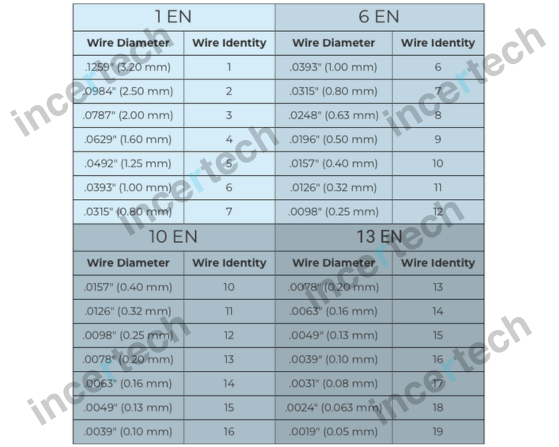
The wire IQI consists of a series of wires of decreasing diameter encapsulated in plastic. The diameter of the thinnest wire provides a measure of the quality of the image.
The step IQI is a piece of material that decreases stepwise in thickness and contains holes.
Again it is the smallest thickness that can be seen on the image that provides a measure of the quality.
The use of IQIs is covered by radiographic standards and when specifying an IQI it is important to quote the number of the standard to which it relates.